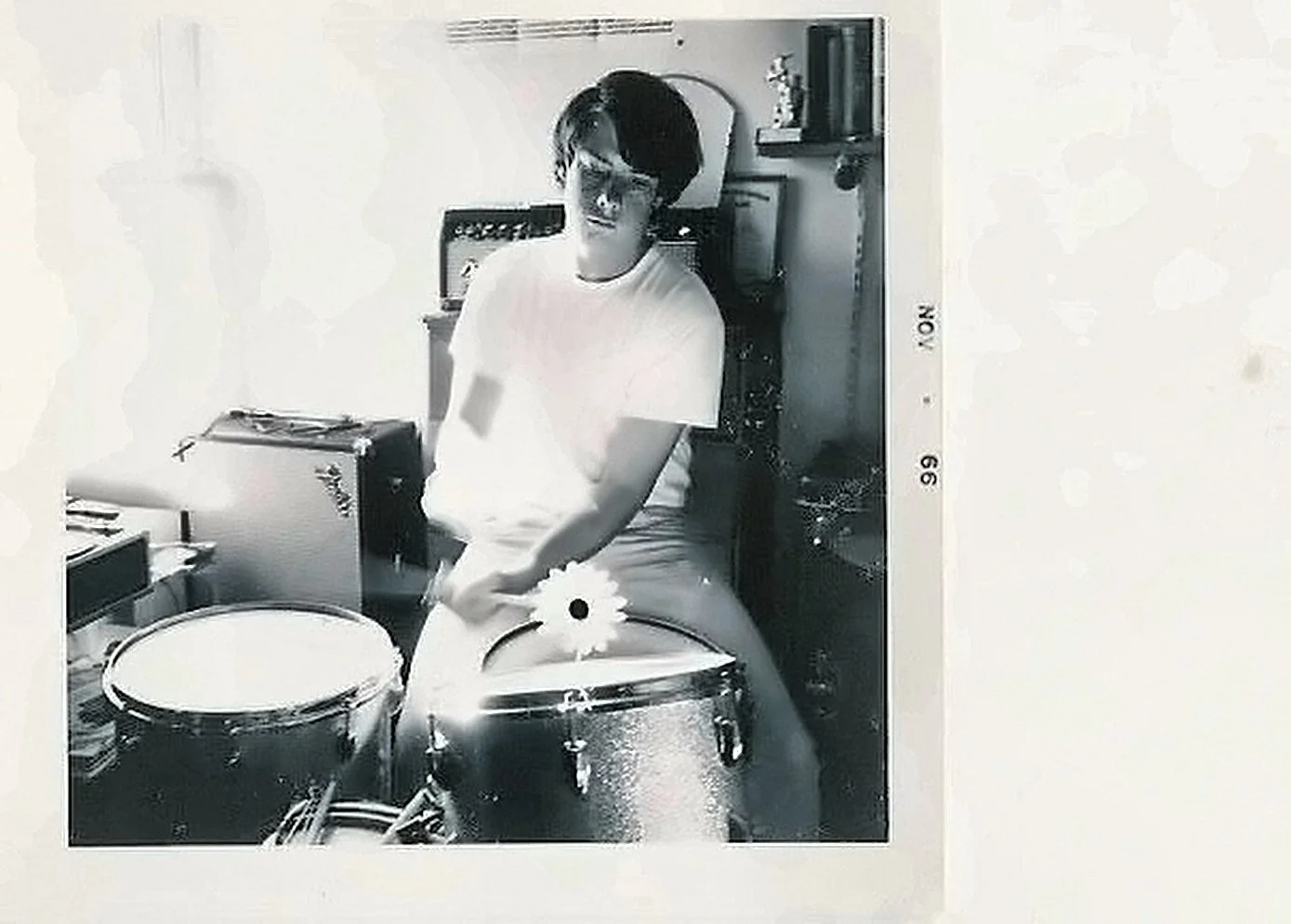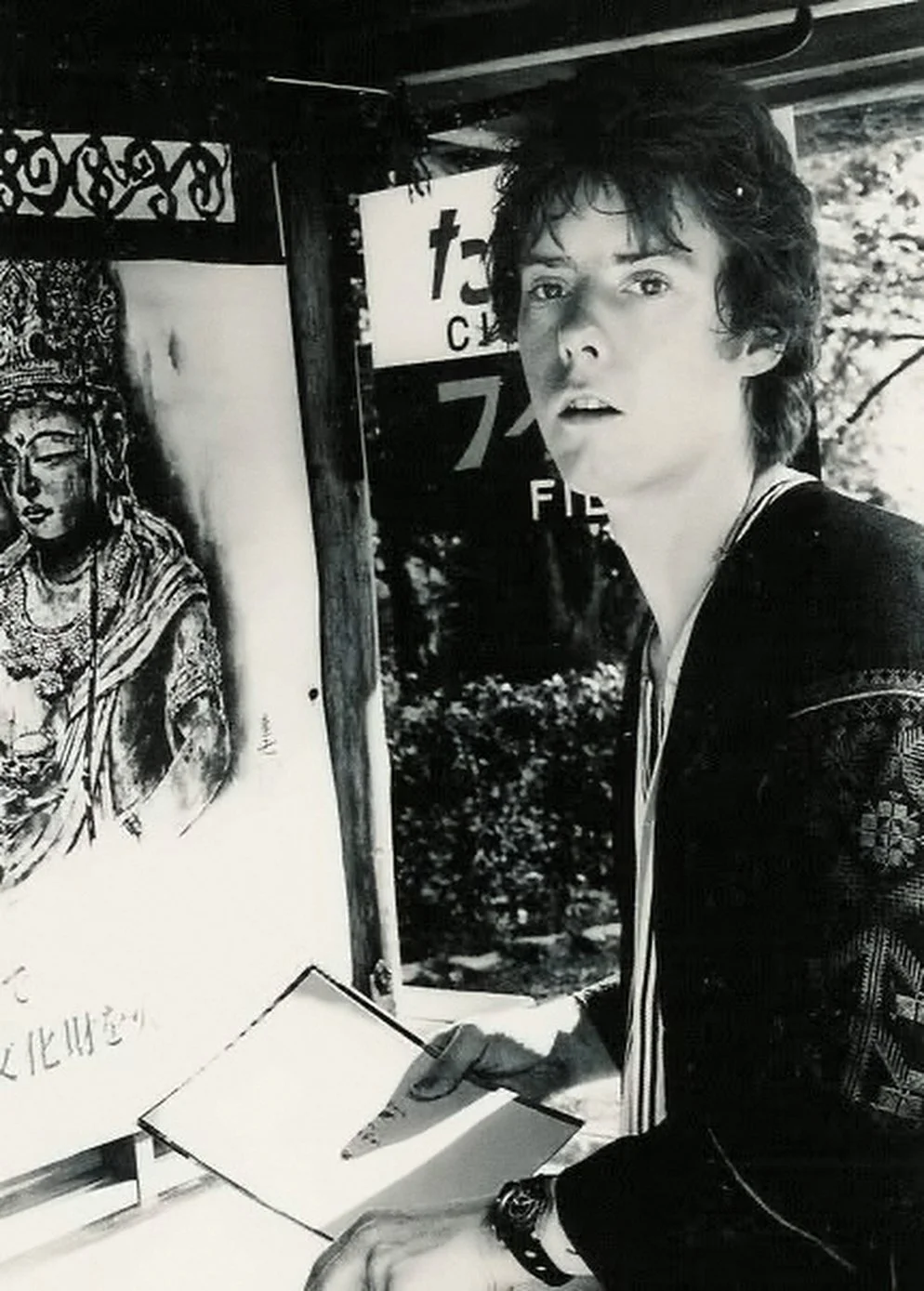
Michael Shrieve has spent six decades listening. He was a working drummer before he was out of his teens, and at nineteen he was the youngest musician on the stage at Woodstock, playing with Santana. He helped make that band's first seven albums and was inducted with it into the Rock and Roll Hall of Fame in 1998. Rolling Stone has twice counted him among the finest drummers ever: its editors placed him on their list of the 100 Greatest Drummers, and in a reader poll he was voted one of the Top 10 Drummers of All Time. Those are the facts people know first. They are the beginning of the story, not the shape of it.
The shape of it is a steady movement outward. In the 1970s Shrieve left the biggest band in the world to follow the music he actually heard: into jazz, into the new electronic instruments he was among the first drummers to take seriously, into long collaborations with players who were asking the same questions he was. He made records with Stomu Yamashta, Steve Winwood and Klaus Schulze in GO; with John McLaughlin, Andy Summers, Bill Frisell, Wayne Horvitz, David Torn and Steve Roach; and, when old friends called, with Mick Jagger, George Harrison and Pete Townshend. He wrote for film, including Paul Mazursky's The Tempest and Curtis Hanson's The Bedroom Window, and in 2002 co-wrote “Aye Aye Aye” with Carlos Santana for Shaman. In 2016 he rejoined the original Santana lineup for Santana IV, contributing two songs. The thread through all of it is the same: a drummer less interested in how to play than in what sound does to the people in the room.
Read more about his transition and musical path in Life After Santana.
That question became the center of his work. Drums of Compassion, his most personal recording, gathers a circle of the world's great percussionists and musicians, among them Zakir Hussain, Jack DeJohnette, Airto Moreira, Babatunde Olatunji, Obo Addy and Trey Gunn, with Seattle composer Jeff Greinke as his primary creative partner. It is an ambient, world-rooted album about music as a form of attention and care, and it has drawn some of the warmest notices of his career.
In Seattle, where he lives, Shrieve has long been a builder of musical community. For years he led the bands Tangletown and Spellbinder, each holding down a weekly residency that became a fixture of the city's music life. He was host and curator of Bumbershoot's Bumberdrum for many years, musical director of the 2001 Major League Baseball All-Star Game pre-game show with more than eighty drummers and dancers, past president of the Pacific Northwest chapter of the Recording Academy, and musical director of the Seattle Theatre Group's More Music @ The Moore, which champions gifted young musicians from the city's many cultures. Guitar Center gave him its first Lifetime Achievement Award in 2005.
These days the drums are only one of his instruments. Shrieve writes. Invisible Rhythms, published in 2026, is a meditation on the creative long game: on practice, patience, listening, and the signal that keeps an artist working for a lifetime. My Friend Elvin: Conversations on Music and Life with Elvin Jones, drawn from a decade of friendship and recorded conversations with the great drummer, is forthcoming. He is at work on Kyrie in Restless Rhythm, a novel-shaped autobiography that lets memory and invention play together. And he has carried rhythm into images: his visual work, in series such as Colorburst Soundfield, translates sound, pulse and the figure of the drummer into color and form, and is available as fine-art prints and for licensing.
What runs underneath all of it is a willingness to let go of what no longer serves and pick up what does. Shrieve has never been content to rest on what he made at twenty; each decade he has reached for new tools and new media, from electronic percussion in the seventies to video, image-making and AI now, because the work was never about the instrument. It was about what music does to us: how it opens people, how it heals, how it carries something true across a room. His recent work moves toward that directly, blending music, image and spiritual practice into experiences meant to reach people where they sit. An album with saxophonist Sam Morrison, Music On the Way to Mars, is in its final stages.
He still does this for the reason he started: because a room changes when the right sound enters it.
I owe Michael a lot; He's the one who turned me onto John Coltrane and Miles Davis. I just wanted to play blues until Michael came. He opened my eyes and my ears and my heart to a lot of things. Some drummers only have chops, but Michael Shrieve has vision.
- Carlos Santana